Lessons from Indiana: Raising Taxes on Tobacco to Reduce Consumption & Raise Revenues
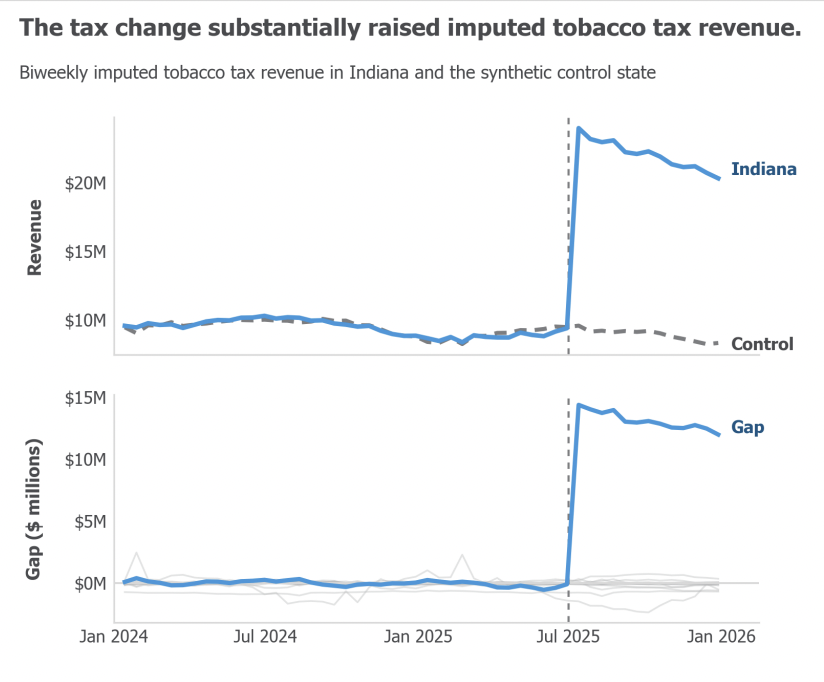
With the rise in popularity of emerging tobacco and nicotine products, tax policy lags in many parts of the world, often allowing users to easily switch to cheaper alternatives. International best practices counsel that governments should raise taxes on all products to drive down initiation of any product and to decrease consumption across the tobacco/nicotine product spectrum. In July 2025, the US state of Indiana was one of a handful of tax jurisdictions to pass comprehensive tobacco/nicotine product excise tax reform. The state increased its cigarette specific excise tax from $0.995 to $2.995 per pack, doubled its ad valorem e-cigarette excise tax to 30%, and raised excise taxes on other tobacco products.
In our new fact sheet with the CDC Foundation, we examine the effect of these policy changes.
First, cigarette consumption decreased substantially from the $2 price increase per pack. In the second half of 2025, 12.6 million fewer packs were sold compared to the synthetic control (please see the fact sheet for a thorough explanation).
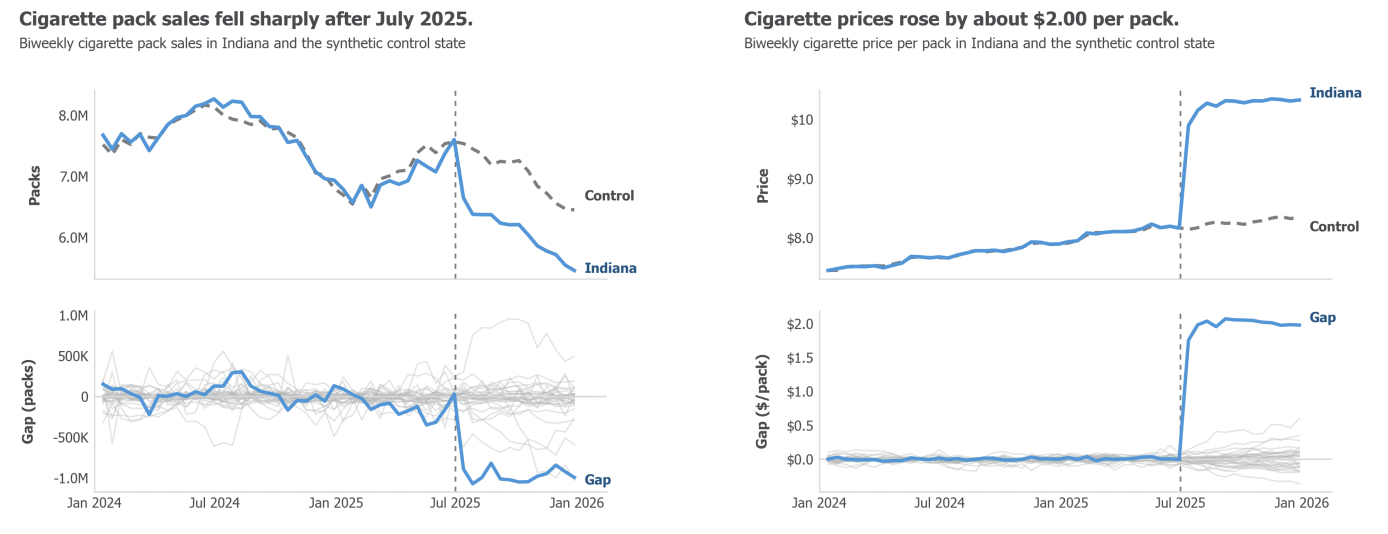
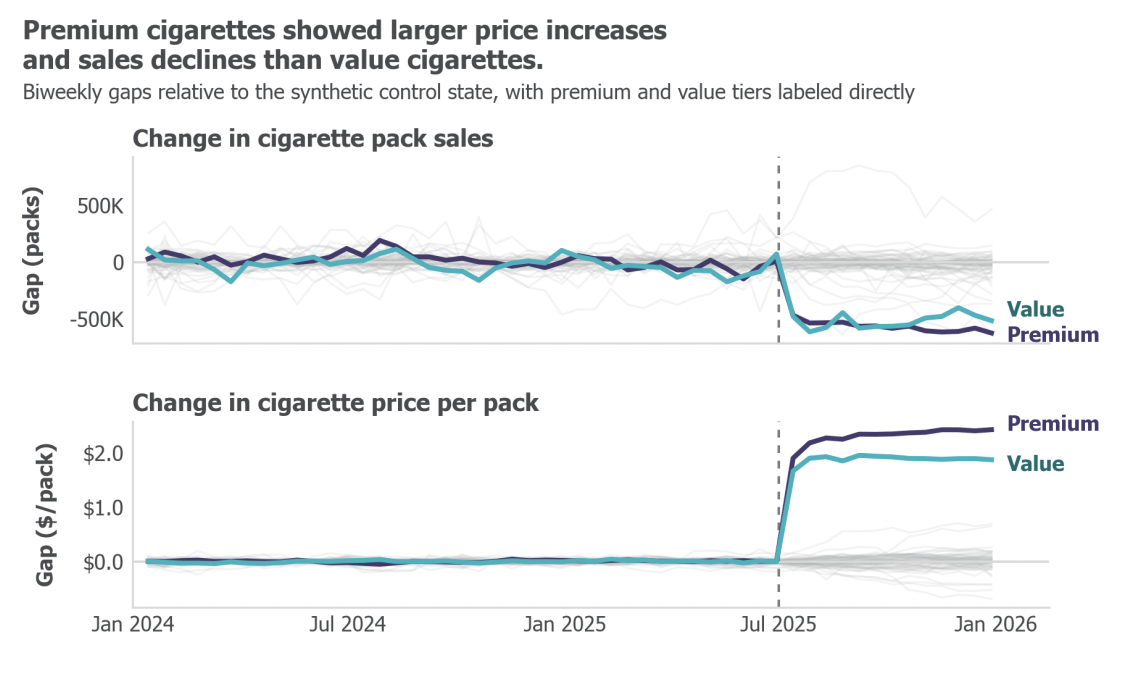
While the overall pass-through of tax to price was $2, about the same as the tax increase (or a “full” pass-through), the price of premium cigarettes, specifically, increased more after the tax reform relative to value brands—by $2.31 and $1.88 per pack, respectively. As a result, sales of premium cigarettes also declined more than value brands. This is a common pricing strategy that tobacco companies use knowing that people who smoke value brands are typically more sensitive to price increases, helping to lessen the effects on these customers.
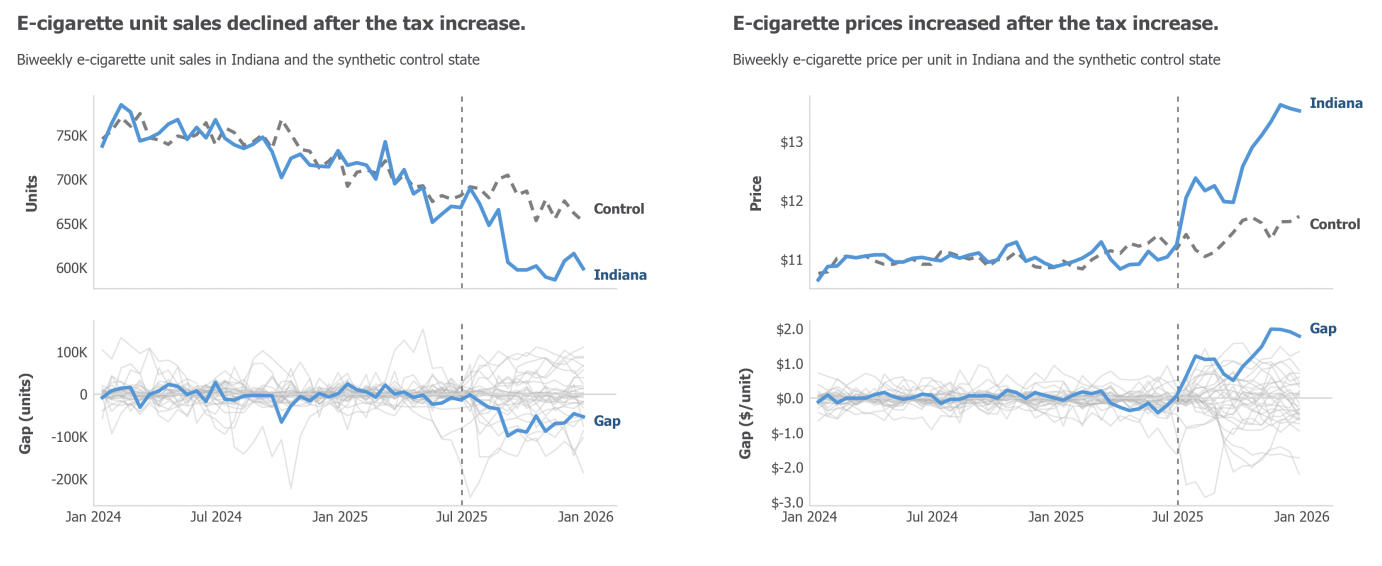
Raising the tax on e-cigarettes similarly led to an increase in e-cigarette prices, and a decrease in their sales in the second half of 2025. Our estimates suggest that e-cigarette sales declined by around 8.3%.
Learn more about the findings here.